
Niya Digital

Domain Hosting Services For Business in Solomon Islands

Reviewed by Deepak Sakhrani, Founder & CEO — Last updated: 10th July 2026. Bundling a domain with hosting changes how a Solomon Islands business handles DNS, email deliverability, and uptime under one account, rather than juggling a registrar and a separate host with mismatched support windows.

Domain Registrations @ $14.99 | Domain Renewals @ $15.99

Domain Hosting for Business in Solomon Islands

*1dollardomainhosting is owned & operated by Niya Digital.

What Domain Hosting Services Actually Bundle Together

Domain hosting services combine domain name registration or management with the server space that runs a website, under one billing relationship and one support line. For a Solomon Islands business, that pairing removes the coordination gap between a registrar and a separate hosting company.

Domain Hosting For Business Defined

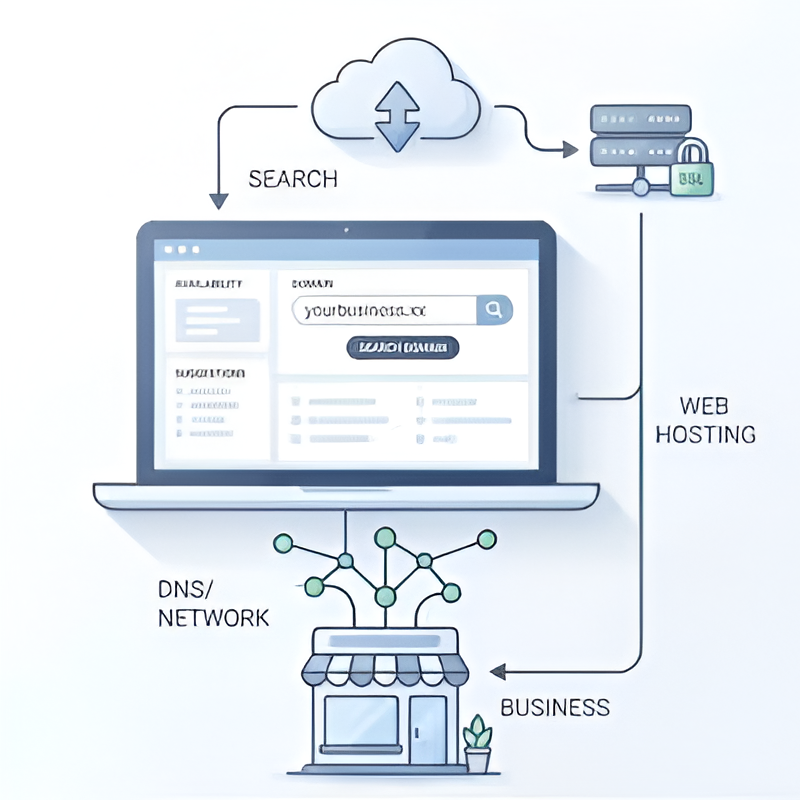
Domain hosting for business is the practice of pointing a registered domain name at server infrastructure that stores a company's website files, email, and application data, managed through a single provider relationship. This differs from domain registration alone, which only reserves the name at the registry level, and from raw hosting alone, which has no naming layer attached. When the two are bundled, DNS records, SSL provisioning, and mail routing sit under one control panel instead of two separate logins with separate renewal calendars.

For a small or mid-sized Solomon Islands company, the practical effect is fewer places where a misconfiguration can happen. A nameserver change made on the registrar side but never reflected on the hosting side is one of the most common causes of a website going dark after a renewal, and bundling removes that seam entirely. Support tickets also resolve faster because the provider can see the domain record and the server environment in the same dashboard, rather than needing to loop in a second company to check a setting on their end.

Why Bundling Changes Day-To-Day Management

Day-to-day management shifts noticeably once domain and hosting sit together. A single renewal date, a single invoice, and a single support escalation path mean fewer places for a task to fall through the cracks, particularly for a business without a dedicated IT administrator. Adding a subdomain, updating an MX record for email, or rotating an SSL certificate becomes a task inside one panel instead of a cross-provider coordination exercise that depends on two support teams being responsive at the same time.

Renewal reviews commonly surface a stale SPF include nobody remembers adding, and that kind of drift is easier to catch and fix when the domain and mail records live in the same account as the hosting environment. Businesses that keep the two separated often only discover a mismatch when email starts bouncing or a certificate expires silently, at which point the fix takes longer because two support queues have to agree on what changed.

What Solomon Islands Businesses Weigh Before Choosing A Provider

Business domain hosting decisions in Solomon Islands run through a shorter but distinct checklist than in larger markets: latency to regional data centers, GST-compliant invoicing for local accounting, and whether a .sb domain or a .com is the better fit for the audience being targeted.

Domain Hosting Solomon Islands Buyers Actually Evaluate - Solomon Islands

Domain Hosting Solomon Islands Buyers Actually Evaluate

Solomon Islands buyers weigh latency more heavily than businesses in markets with local data centers, since the nearest major hosting infrastructure typically sits in Australia or New Zealand rather than Honiara. A provider that routes through Australian or Pacific-adjacent data centers usually delivers noticeably better page load times for a Solomon Islands audience than one anchored in North America or Europe, and that difference shows up directly in bounce rates for an ecommerce or services site.

Currency and invoicing expectations also shape the decision. Solomon Islands businesses generally prefer pricing quoted in SBD or at least clearly convertible from it, alongside GST-compliant invoicing that matches how the Inland Revenue Division expects business records to be kept. A provider that only issues invoices in USD with no GST line item creates extra reconciliation work for a local bookkeeper, which is a small but recurring friction point that shows up repeatedly in renewal-time support conversations.


.sb Versus .com For A Solomon Islands Business

Market behavior in Solomon Islands leans toward .com for businesses targeting export, tourism, or a Pacific-wide audience, while .sb is chosen deliberately by organizations wanting to signal local presence, such as tourism operators, government-adjacent bodies, and businesses competing directly against other Solomon Islands companies for local search visibility. Neither choice is objectively correct; it depends on whether the audience searching for the business is local or international.

A hospitality or logistics business serving customers physically in the islands often benefits from registering both the .com and the .sb variant, pointing the primary site at whichever is registered first and redirecting the other, so a competitor cannot register the matching extension later and create brand confusion. This dual-registration pattern shows up often enough in renewal reviews that it is worth budgeting for from the outset rather than adding it reactively after a domain squatting scare.

SSL On A Bundled Domain Hosting Plan

Domain hosting with SSL means the certificate that encrypts traffic between a visitor's browser and the server is provisioned and renewed automatically as part of the hosting plan, rather than purchased, installed, and tracked separately by the business.

How Per-Domain SSL Provisioning Works

Per-domain SSL provisioning ties a certificate to the specific domain and any registered subdomains at the point of hosting setup, and the certificate authority validates ownership automatically against the DNS records already sitting in the same account. This removes the manual certificate-signing-request step that businesses managing domain and hosting separately still have to perform, and it removes the renewal risk that comes from a certificate quietly lapsing because nobody was watching an external calendar reminder.

For a Solomon Islands business running a customer-facing site or an online payment page, an expired certificate is not a cosmetic problem. Modern browsers block the page outright with a security warning, and that warning is enough to send most visitors away before they ever see the site. A hosting plan with per-domain SSL folded in as a default, rather than an optional upsell, removes this failure mode entirely rather than just making it easier to fix after the fact.

Where SSL Gaps Actually Show Up

SSL gaps tend to appear at subdomain boundaries rather than on the primary domain. A business that adds a new subdomain for a booking system or a customer portal months after the original setup often finds that subdomain is not automatically covered unless the hosting plan's certificate handling is wildcard-capable or set to detect new subdomains without manual intervention. This is one of the more common support tickets logged after a business expands its site structure without revisiting its SSL configuration.

Mixed-content warnings are the other frequent gap, appearing when a page loads correctly over HTTPS but still references an image, script, or embedded form over plain HTTP from an earlier, non-secured setup. Reseller-managed provisioning that scans the site for these references during migration catches most of them before launch, whereas a self-managed setup usually only surfaces them once a customer reports the browser warning directly.

Business Email Bundled Into Domain Hosting

Domain hosting with business email means mailboxes at the company's own domain are provisioned from the same account as the website, rather than run through a free consumer email service that undermines how professional the business looks to a customer or supplier.

Business Email Hosting In Solomon Islands - Solomon Islands

Business Email Hosting In Solomon Islands

A mailbox ending in the company's own domain rather than a generic consumer provider changes how a Solomon Islands business is perceived by suppliers, banks, and international customers evaluating whether to trust an invoice or a payment request. Banks and payment processors in particular increasingly flag consumer-domain email addresses during merchant verification, which can slow down account approval for a business that has not yet moved to domain-based email.

Mailbox storage limits and attachment sizes matter more in a market where mobile connectivity is the primary access point for many staff. A hosting plan that caps attachments too aggressively or offers thin storage tiers creates friction for businesses regularly exchanging shipping documents, tender submissions, or high-resolution product photography, so checking the specific mailbox allowance before signing up avoids a mid-year forced upgrade.

Spam Filtering And Deliverability On A Bundled Plan

Layered anti-spam and anti-virus filtering sitting in front of the mail server catches the bulk of malicious traffic before it reaches an inbox, and this layer matters more for a small business than it might seem, since a single successful phishing email impersonating a supplier can lead directly to a fraudulent payment. A hosting provider that manages this filtering as part of the bundle removes the need for a separate spam-filtering subscription and keeps the rules current without manual tuning.

Deliverability depends heavily on SPF, DKIM, and DMARC records being configured correctly against the domain, and this is one of the areas where bundled domain and hosting genuinely outperforms a split setup, because the provider can align mail authentication records with the domain's DNS in one step rather than asking the business to manually copy values between two separate control panels. Renewal reviews commonly surface a stale SPF include nobody remembers adding, which quietly degrades deliverability until outbound mail starts landing in spam folders.

Cloud And VPS Options Within A Domain Hosting Plan

Cloud hosting and VPS hosting sit above shared hosting as options within a domain hosting plan, offering dedicated resources or elastic scaling for a Solomon Islands business whose traffic or application demands outgrow a shared server environment.

When Shared Hosting Stops Being Enough

Shared hosting works well for a standard brochure site or a low-traffic booking page, but a business running a database-driven application, a busy ecommerce catalog, or a booking system with real-time availability checks typically hits performance ceilings on shared infrastructure well before traffic volumes look large by international standards. Dedicated hosting infrastructure tiers exist precisely to remove the noisy-neighbor effect that shared environments create, where another account's traffic spike slows down every site on the same physical server.

A redundant data center architecture becomes relevant at this stage too, since a business moving to VPS or cloud hosting is usually doing so because downtime now has a measurable revenue cost. Redundancy at the infrastructure level, rather than just at the application level, is what actually protects against a single hardware failure taking a site offline, and it is worth confirming explicitly rather than assuming it is included by default.

Choosing Between VPS And Cloud For A Growing Business

VPS hosting allocates a fixed slice of server resources that behaves predictably and is easier to budget against, which suits a Solomon Islands business with steady, forecastable traffic such as a professional services firm or a regional distributor. Cloud hosting instead scales resources up and down based on demand, which suits a business with seasonal spikes, such as a tourism operator seeing traffic surge ahead of the dry season or a retailer around a promotional period.

The trade-off is predictability versus flexibility rather than one option being categorically better. A fixed VPS allocation avoids surprise cost increases during a traffic spike but can throttle performance if demand outpaces the provisioned resources, while cloud hosting absorbs the spike automatically but bills accordingly, so a business needs to model its own traffic pattern honestly before choosing rather than defaulting to whichever option a provider promotes most heavily.

Expert Hosting Guidance

Scaling Beyond Shared Hosting With The Right Partner

Moving from shared hosting to VPS or cloud is a resourcing decision, not just a technical one, and getting the sizing wrong in either direction costs money. As an Authorized Partner, Niya Digital can walk through actual traffic patterns before recommending a tier, so the business pays for capacity it will use.

Why speak with Niya Digital?

Get a hosting plan based on real requirements.

Review your current hosting and resource usage

Recommend a hosting tier matched to actual demand

Get migration support when a change is needed

Trusted Reseller & Authorized Partner

Enterprise Domain Hosting And Security Expectations

Enterprise domain hosting and secure domain hosting describe plans built around higher support tiers, stricter access controls, and hardened infrastructure for Solomon Islands businesses handling sensitive customer data, payment information, or regulatory reporting obligations.

What Enterprise Domain Hosting Adds Beyond Standard Plans - Solomon Islands

What Enterprise Domain Hosting Adds Beyond Standard Plans

Enterprise domain hosting typically adds priority support tiers with faster response-time commitments, dedicated account management, and access to infrastructure that is isolated from lower-tier shared environments. For a Solomon Islands bank, insurer, or larger trading company, the difference matters most during an incident, since a priority ticket queue can mean the difference between a two-hour resolution and a two-day one when a payment gateway integration breaks.

2FA enforcement at the account and control-panel level is a baseline expectation at this tier rather than an optional add-on, given that a compromised hosting login can expose customer data, email, and payment infrastructure simultaneously. A provider that makes two-factor authentication mandatory for administrative access, rather than merely available, closes off one of the more common attack paths that smaller, less security-conscious hosting setups leave open.

Security Considerations Specific To Larger Solomon Islands Operations

Storage pooling across a business's various sites and applications, rather than siloed allocations per service, tends to appear at the enterprise tier as a way of avoiding wasted capacity when one application needs more room and another needs less. This matters for a Solomon Islands group with multiple brands or subsidiaries running from a shared hosting account, since siloed storage forces premature upgrades that pooled storage avoids.

Businesses handling card payment data or health records face an additional layer of scrutiny around where data physically resides, and while Solomon Islands does not yet have a comprehensive data protection statute equivalent to more developed regimes, businesses working with Australian or New Zealand partners often need to meet those partners' data residency expectations contractually. Confirming which data center region a plan actually uses, rather than assuming, avoids a compliance surprise during a partner audit.

What Domain Hosting Pricing Actually Looks Like

Domain hosting pricing in Solomon Islands varies by plan tier, resource allocation, and whether email and SSL are bundled in or charged separately, and providers typically quote in either SBD or USD depending on their invoicing setup.

Domain Hosting Pricing Solomon Islands Businesses Can Expect

Entry-level shared domain hosting plans suited to a small brochure site or a single-mailbox setup generally sit in the lower hundreds of SBD per year when bundled with a domain, though exact figures vary by provider and by how much storage and mailbox allowance is included. Businesses should treat any figure quoted here as an approximate range rather than a fixed offer, since promotional first-year pricing frequently differs from renewal-year pricing, and that gap is worth asking about explicitly before signing up.

Mid-tier and VPS plans for a growing business with a database-backed site or several mailboxes typically cost several times the entry-level rate, reflecting the dedicated resource allocation. Enterprise tiers with priority support and isolated infrastructure sit higher again, and at that level pricing is usually quoted individually based on resource needs rather than published as a flat rate, since the underlying configuration varies too much business to business to price generically.

Where Hidden Costs Typically Appear

Domain renewal pricing is one of the most common places a hidden cost appears, since a first-year promotional rate for the domain itself can be substantially lower than the renewal rate charged from year two onward, and a business that budgets only against the first invoice is often surprised at renewal time. Reviewing the renewal-year pricing table before committing, not just the headline first-year figure, avoids this specific surprise.

Migration fees, additional mailbox charges beyond an included allowance, and backup storage overages are the other recurring sources of unexpected cost. A provider that is upfront about GST-compliant invoicing and itemizes these potential charges clearly in its plan comparison is generally easier to budget against than one that bundles everything into a single opaque monthly figure with no breakdown available on request.

Migration And DNS Setup When Switching Providers

Website migration and DNS hosting changes are where most switching-related downtime originates, since moving a live business site between providers means carefully sequencing DNS propagation, data transfer, and email cutover to avoid an outage customers actually notice.

How A Migration Concierge Reduces Switching Risk

A migration concierge service, where the receiving provider handles the technical transfer directly rather than leaving the business to export and re-upload its own site files, meaningfully reduces the risk of a botched switch. This matters particularly for a Solomon Islands business without in-house technical staff, since a self-managed migration that goes wrong can mean hours or days of a broken site while the business tries to diagnose what changed.

DNS propagation time is the piece most businesses underestimate, since even a correctly executed change can take anywhere from a few minutes to 48 hours to fully propagate across all resolvers globally, depending on the time-to-live value set on the previous provider's records. Scheduling a migration for a low-traffic period and lowering TTL values in advance of the cutover are both practical steps that a migration concierge should handle without being asked.

Sequencing Email Cutover Without Losing Messages

Email cutover requires a different sequencing than the website itself, because mail can be lost during the transition window if MX records point to the new provider before mailboxes are actually provisioned and ready to receive on the new side. The safer sequence is provisioning the new mail environment first, testing it in parallel with the old one still live, and only switching MX records once delivery on the new side is confirmed working.

A common mistake during self-managed migrations is changing nameservers and MX records in the same step, which removes the ability to roll back cleanly if something goes wrong with either the website or the mail environment independently. Separating the two changes, even by a day, gives a business a much narrower and easier problem to diagnose if an issue appears after the switch.

Comparing Domain Hosting Providers For Solomon Islands

Domain hosting provider Solomon Islands comparisons come down to a handful of concrete factors: data center proximity, support responsiveness in a compatible time zone, invoicing currency, and whether email and SSL are included or charged as add-ons.

Best Domain Hosting For Business: What The Comparison Actually Hinges On

Time zone alignment for support is easy to overlook until an outage happens outside a provider's working hours. A provider whose support desk operates on a schedule that barely overlaps with Solomon Islands business hours effectively adds a full day to any incident resolution, regardless of how good their technical team is on paper. Confirming actual support hours against local time, not just a generic "24/7" claim that may route through a slower queue overnight, is worth doing before signing a contract.

Low-cost, unmanaged offerings from generic international discount hosts often look cheaper on the sticker price but shift the DNS troubleshooting, SSL renewal, and mail deliverability work back onto the business itself, which erodes the cost advantage once staff time is factored in. A Certified Sales Partner relationship, by contrast, keeps that operational burden with the provider rather than the client.

Domain Hosting Plan Comparison

A structural comparison across common plan tiers available to Solomon Islands businesses.

Plan TierTypical Mailboxes IncludedSSL ProvisioningSupport Response TargetBest Suited For
Entry Shared1-3Automatic, shared certificate poolStandard queue, business hoursSingle-page brochure sites
Standard Shared5-10Per-domain automaticStandard queue, extended hoursSmall business with basic email needs
VPS10-25Per-domain, wildcard optionalPriority queue, business hoursDatabase-driven sites, steady traffic
Cloud10-50Per-domain, wildcard includedPriority queue, extended hoursSeasonal traffic spikes, tourism, retail
Enterprise50+Wildcard, isolated cert managementDedicated account manager, fastest tierRegulated industries, larger operations
Migration Add-OnN/AN/AConcierge-handled cutoverAny tier switching providers
Backup Tier (Standard)N/AN/ADaily automated snapshotMost standard business sites
Backup Tier (Extended)N/AN/AHourly snapshot, longer retentionEcommerce, transactional sites

.sb Domains And Hosting Built For Solomon Islands SMEs

Hosting for Solomon Islands SMEs and .sb domain hosting specifically address the businesses most likely to be underserved by generic international hosting packages built for much larger markets with different infrastructure assumptions.

.sb Domain Hosting In Practice - Solomon Islands

.sb Domain Hosting In Practice

Registering and hosting a .sb domain involves a slightly different process than a generic .com, since .sb is administered locally and may carry documentation or eligibility requirements that a reseller familiar with the market can navigate faster than a business attempting it directly. A Trusted Reseller handling this registration on the business's behalf typically resolves eligibility questions in a single support interaction rather than the back-and-forth a business would face going through the registry process unassisted.

The current-year renewal cycle for many Solomon Islands SMEs tends to cluster around the dry-season tourism push and the pre-Christmas retail period, when businesses reassess their online presence ahead of peak demand. Providers that anticipate this pattern and proactively flag upcoming renewals during that window, rather than only sending a generic automated reminder, help SMEs avoid the scramble of a lapsed domain right before their busiest weeks.

Hosting For Solomon Islands Startups On A Tight Budget

A startup registering its first domain typically starts on an entry shared plan and needs a clear, low-friction upgrade path rather than a forced migration when it outgrows that tier. Providers that let a business move from shared to VPS within the same account, keeping the domain and email configuration intact, save a founder the disruption of a full re-platforming exercise just to get more resources.

Mobile-first management matters disproportionately for Solomon Islands startups, where a founder may be managing the business primarily from a phone rather than a desktop workstation. A hosting control panel that functions cleanly through a mobile browser, without requiring a native app that may not be optimized for lower-bandwidth connections, removes a real barrier that generic international providers sometimes design around a desktop-only assumption.

Get .sb And .com Domain Hosting Set Up Correctly From The Start

Getting .sb registration and hosting configured correctly the first time avoids the rework that comes from a rushed, self-managed setup. As a Certified Sales Partner, Niya Digital can handle registration, DNS, and mailbox provisioning together so nothing is left half-configured.

Ready to get started?

Register your domain, launch your website, and build a secure digital presence with trusted hosting and expert support.

20+

Years

50,000+

Domains

24/7

Support

Frequently Asked Questions

Entry-level shared plans bundling a domain with basic hosting and one or two mailboxes generally start in the lower hundreds of SBD annually, though exact pricing depends on storage allocation, mailbox count, and whether SSL and email are included by default rather than charged separately. First-year pricing is frequently discounted, with renewal-year pricing higher, so it's worth confirming the renewal rate before signing up rather than budgeting only against the introductory offer. VPS and cloud tiers cost several times more due to dedicated resource allocation, while enterprise pricing is generally quoted individually based on the business's specific resource and support needs.

Yes, provided the migration is sequenced correctly. The safer approach provisions the new mail environment first, tests it in parallel with the existing setup still receiving mail, and only updates MX records once delivery on the new side is confirmed working. Changing nameservers and MX records in the same step removes the ability to roll back cleanly if either the website or mail environment has an issue, so separating these changes by even a day narrows the troubleshooting scope considerably if something goes wrong during the cutover.

It depends on the audience. Businesses targeting export markets, tourism from outside the Pacific, or a broader international customer base generally see stronger recognition with .com, since that's the extension most international visitors expect and trust by default. Businesses competing primarily for local search visibility, or wanting to explicitly signal Solomon Islands presence, often benefit from .sb. Many businesses register both and redirect one to the other, which also prevents a competitor from registering the unclaimed extension and creating brand confusion.

On a plan with per-domain automatic SSL provisioning, expiration is rare because renewal happens automatically ahead of the certificate's expiry date without requiring manual action. If it does lapse, typically due to a DNS validation failure the provider couldn't resolve automatically, most modern browsers will block visitors with a security warning until it's fixed, which can immediately cut off traffic to a customer-facing site or checkout page. Newly added subdomains are the most common gap, since they aren't always automatically covered unless the plan's certificate handling is wildcard-capable or actively scans for new subdomains.

Shared hosting handles a standard brochure site or low-traffic booking page adequately, but a database-driven application, a busy ecommerce catalog, or a booking system with real-time availability checks tends to hit performance limits on shared infrastructure sooner than expected. The clearest signal it's time to move is a noise-neighbor pattern, where site performance dips unpredictably regardless of the business's own traffic levels, which points to resource contention with other accounts on the same shared server rather than a problem specific to the business's own site.

This varies by provider, and it's worth confirming explicitly before signing up rather than assuming. Providers serving the Solomon Islands market directly are more likely to issue invoices with GST itemized in a format that matches Inland Revenue Division expectations for business record-keeping, whereas a generic international host billing only in USD may not itemize this at all, creating extra reconciliation work for a local bookkeeper at tax time. Asking to see a sample invoice before committing is a reasonable step during provider comparison.

The technical transfer of site files and data can often be completed within a day, but full DNS propagation across all global resolvers can take anywhere from a few minutes to 48 hours depending on the time-to-live value configured on the previous provider's DNS records. Lowering the TTL value in advance of a planned migration reduces this window considerably. Scheduling the cutover during a low-traffic period, rather than during peak business hours, minimizes the number of visitors who might encounter inconsistent behavior during the propagation window.

Most modern hosting control panels function through a mobile browser without requiring a dedicated app, though the experience quality varies by provider. This matters particularly for Solomon Islands business owners managing operations primarily from a phone rather than a desktop workstation, especially where bandwidth is inconsistent. Core tasks like checking mailbox status, viewing renewal dates, and opening a support ticket generally work well on mobile, while more complex DNS record editing is sometimes easier on a desktop screen due to the amount of detail involved.

Shared hosting places multiple accounts on the same server sharing resources, which is cost-effective but vulnerable to another account's traffic spike slowing down your own site. VPS hosting allocates a fixed, dedicated slice of server resources that behaves predictably, suiting a business with steady, forecastable traffic. Cloud hosting scales resources up and down automatically based on real-time demand, suiting a business with seasonal spikes such as a tourism operator ahead of peak season, though this flexibility comes with less predictable billing tied to actual usage.

This depends on the plan tier. Standard shared and VPS plans commonly include daily automated snapshot backups as part of the base package, while ecommerce or transactional sites handling frequent data changes often need an extended backup tier with hourly snapshots and longer retention, which is typically an additional cost. It's worth confirming both the backup frequency and how far back the retention window goes, since a business that only discovers its backup only retains seven days of history after needing to restore something older has effectively lost that data.

Case Studies

Digital Commerce & ServicesDomain Hosting

A digital commerce business operated a customer-facing website, a transactional platform, corporate email, and several supporting web services. Like many growing companies, the team treated domain hosting and web hosting as functionally ide...

Read More about Domain Hosting and the DNS-vs-Web-Hosting Distinction

Key Takeaways

Bundled domain and hosting removes the coordination gap between separate registrar and host accounts, reducing misconfiguration risk around DNS, SSL, and mail records.

Solomon Islands buyers should weigh data center proximity, SBD or GST-compliant invoicing, and time-zone-aligned support as heavily as raw price.

Registering both .com and .sb, where the audience justifies it, protects against brand confusion from a competitor claiming the unregistered extension.

Per-domain SSL and layered spam filtering are baseline expectations on a well-built plan, not premium add-ons to negotiate for separately.

Migration risk concentrates around DNS propagation timing and email cutover sequencing; separating nameserver and MX record changes reduces rollback risk.

Enterprise-tier hosting adds priority support, mandatory 2FA, and isolated infrastructure that matter most to regulated or larger Solomon Islands operations.

First-year promotional pricing on domains and hosting plans commonly differs from renewal pricing, so budgeting against renewal-year rates avoids surprises.

Customer Success Stories

From startups and e-commerce businesses to financial platforms and global enterprises, organizations across different industries rely on dependable domain registration, hosting, DNS management, and security services to support business growth and protect their online presence.

"We were three weeks from launch and treating domain registration as an afterthought — grab the name, move on. The team walked us through variant registrations and locking before we'd even considered them. Two years later, we've never had a brand-protection scramble, which is exactly what we were told to expect but didn't fully appreciate until we saw the alternative play out with a competitor."

Marcus Whitfield

Co-Founder

Technology Startup

United StatesDomain Registration

"Our domains were expiring on five different schedules across three different staff inboxes before we brought everything under one renewal system. It's not glamorous work, but knowing our storefront and support portal can't accidentally lapse has removed a risk I used to lose sleep over during peak season."

Sarah Bouchard

Director of IT Operations

Online Retail Company

CanadaDomain Renewal

"We'd grown into a mess of registrar logins across departments and needed to consolidate without touching our live website or email. The transfer was scoped tightly, monitored domain by domain, and we didn't experience a single hour of disruption. That discipline around scope is what I'd recommend to any firm considering the same move."

James Okafor-Reid

Head of Technology

Professional Services Firm

United KingdomDomain Transfer

"Our DNS zone had become tribal knowledge spread across half a dozen engineers, and it showed every time someone made a change without knowing what it touched. Having every record documented and mapped to the service it supports has taken a genuine source of operational risk off the table."

Lena Vogt

VP of Engineering

B2B Software Company

GermanyDNS Management

"For a platform processing customer transactions, we needed to show auditors exactly who could change production DNS and why. The access controls and change logging we put in place turned what used to be an uncomfortable audit conversation into a straightforward one."

Rachel Tan

Chief Information Security Officer

Financial Technology Platform

SingaporeDNS Management (Compliance)

"We'd been treating our domain and our web host as the same thing for years, which made every infrastructure decision feel bigger than it needed to be. Separating DNS hosting from web hosting meant our last platform migration was a contained, unremarkable change instead of the ordeal our earlier moves had been."

Daniel Foster

Head of Infrastructure

Digital Commerce Business

AustraliaDomain Hosting

"Within weeks of registering my domain, I was fielding calls and emails clearly sourced from public WHOIS data. Enabling privacy protection while keeping our actual registrant details accurate solved the problem properly, rather than the workaround of submitting false information that I'd seen other small business owners resort to."

Priya Raghunathan

Founder

Independent Online Business

IndiaWHOIS Privacy Protection

"We wanted a specific domain that was approaching expiration but didn't want an engineer manually checking its status every few days. Having the lifecycle monitored systematically, with our budget and criteria agreed upfront, meant we were ready to act the moment it became available instead of reacting under pressure."

Kenji Matsuda

Product Lead

Consumer Technology Company

JapanDomain Backorder / Expired-Domain Acquisition

"Auction environments are designed to make you overpay for scarcity. Having a defined evaluation checklist — brand fit, trademark screening, total cost, and a hard bid ceiling — kept our decision grounded in what the domain was actually worth to us, not what the bidding pressure made it feel worth in the moment."

Fatima Al-Suwaidi

Chief Marketing Officer

Online Retail Company

United Arab EmiratesDomain Auction Advisory

"We were launching several properties at once, and I was far more worried about what would happen a year later than about the registrations themselves. Every domain came with a named owner and a documented purpose from day one, which meant we never ended up with the orphaned domains that plague most bulk launches."

Rafael Nogueira

Director of Digital Marketing

Digital Marketing Organization

BrazilBulk Domain Registration

"Expanding into local-language search meant our domain strategy needed to be more than a translated version of our global brand. Compatibility testing across email and DNS before we committed to our localized domains saved us from support issues we later learned other companies ran into after rolling out IDNs without that step."

Chiamaka Eze

Regional Growth Manager

Consumer Services Company

NigeriaInternationalized Domain Names & Localization

"Once we recognized that a domain compromise for us wouldn't just be a website outage but an authentication incident, we treated it accordingly — locked, access-restricted, DNSSEC-enabled, and reviewed alongside our other security controls. It's now part of our formal security architecture review, not a separate IT checklist item."

Willem de Groot

Chief Technology Officer

Financial Technology Platform

NetherlandsDomain Security

"Our biggest exposure was never fraud — it was the idea of a hijacked domain publishing something under our name before we could even respond. The DNS monitoring and dedicated incident-response path we now have means we'd catch that in minutes, not hours, which for a publisher is the entire difference."

Naledi Dlamini

Head of Digital

Media & Publishing Organization

South AfricaDomain Security (Media & Brand Protection)

"Every new market we entered brought its own small wave of domain decisions, and eventually nobody could tell you what we actually owned. Building a single inventory with clear ownership and consistent controls turned an invisible governance gap into something we can now manage deliberately as we keep expanding."

Minh Tran

Regional Operations Director

Digital Commerce Business

VietnamDomain Portfolio Management

"We didn't realize how much client-facing email was quietly landing in spam until we looked closely at our SPF and DKIM configuration across our domains. Rebuilding our authentication properly, rather than patching it domain by domain as complaints came in, made a measurable difference in what our clients actually saw land in their inbox."

Isabela Cruz

Director of Client Services

B2B Professional Services Firm

PhilippinesEmail Hosting & Deliverability

Glossary

Quickly understand the technical terms used throughout this guide. Search any keyword below to find its definition.

DNS (Domain Name System)

The system that translates a human-readable domain name into the numeric address a server uses to locate a website or mail server.

SSL (Secure Sockets Layer)

A protocol that encrypts data traveling between a visitor's browser and a website's server, indicated by a padlock icon and required for secure checkout pages.

MX Record (Mail Exchange Record)

A DNS record that tells other mail servers where to deliver email for a given domain.

SPF (Sender Policy Framework)

A DNS record listing which mail servers are authorized to send email on behalf of a domain, used to reduce spoofing and improve deliverability.

DKIM (DomainKeys Identified Mail)

An email authentication method that adds a digital signature to outgoing messages, allowing receiving servers to verify the message wasn't altered in transit.

DMARC (Domain-based Message Authentication, Reporting and Conformance)

A policy layered on top of SPF and DKIM that tells receiving mail servers what to do with messages that fail authentication checks.

TTL (Time to Live)

A value on a DNS record that determines how long resolvers cache that record before checking for updates, directly affecting how fast a DNS change propagates.

VPS (Virtual Private Server)

A hosting model that allocates a dedicated, isolated slice of a physical server's resources to one account, rather than sharing them openly with other accounts.

cPanel

A widely used web hosting control panel that lets a business manage domains, email, files, and databases through a single browser-based interface.

WHOIS Privacy

A service that masks a domain owner's personal contact details in the public WHOIS registry, replacing them with the provider's proxy information.

Authoritative Resources

Discover reliable information about domain names, DNS, and country-code top-level domains (ccTLDs) from trusted organizations, official registries, and global authorities.

IANA - Root Zone Database

https://www.iana.org/domains/root/db

ICANN - Domain Name Registration Information

https://www.icann.org

.sb ccTLD - Wikipedia

https://en.wikipedia.org/wiki/.sb

About the Author

Niya Digital Team

The Niya Digital Team is a team of domain and web infrastructure specialists focused on helping individuals and businesses manage their online presence with confidence. Our expertise covers domain registration, transfers, DNS management, domain security, and portfolio management. We research industry updates, follow registrar policies and best practices, and publish clear, practical guides that are regularly reviewed for accuracy and updated to reflect changes in the domain industry. Learn more about our editorial team and standards at Niya Digital.

;
Facebook
X
LinkedIn
WhatsApp
Telegram
Pinterest