
















































































































In-country data centers and what that changes
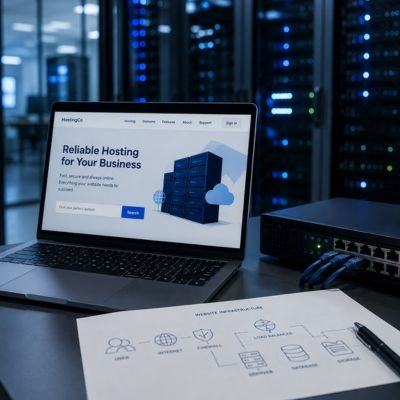
Finland hosts real, large-scale data center capacity, including facilities operated by major cloud and colocation providers along the southern coast, which means Finnish business hosting can genuinely keep both the website and its data inside national borders rather than relying on a data center elsewhere in the European Union (EU). That distinction matters for two separate reasons: raw network latency for domestic visitors, and data residency questions that come up in public sector tenders or in customer contracts that specify where data may legally sit. A provider offering redundant data center architecture across two or more Finnish or Nordic facilities gives more resilience against a single-site outage than one relying on a single overseas server.
Renewal reviews for Finnish business accounts commonly surface a specific pattern: a site was originally set up on a budget hosting plan physically located outside the Nordic region, and nobody revisited that choice once the business began handling customer orders or sensitive form submissions where residency actually mattered. Choosing hosting physically located in Finland or the wider Nordic region is not a legal requirement for most businesses, but it does simplify data protection conversations considerably compared with explaining a data flow to a facility outside the EU, particularly for companies serving public sector clients where a domestic hosting answer is often expected as standard practice.